
Wondering whether to choose Kruger National Park or a private game reserve for your safari? This guide explores the key differences in wildlife viewing, exclusivity, guiding, and overall experience, helping first-time travellers decide which safari style is right for them.
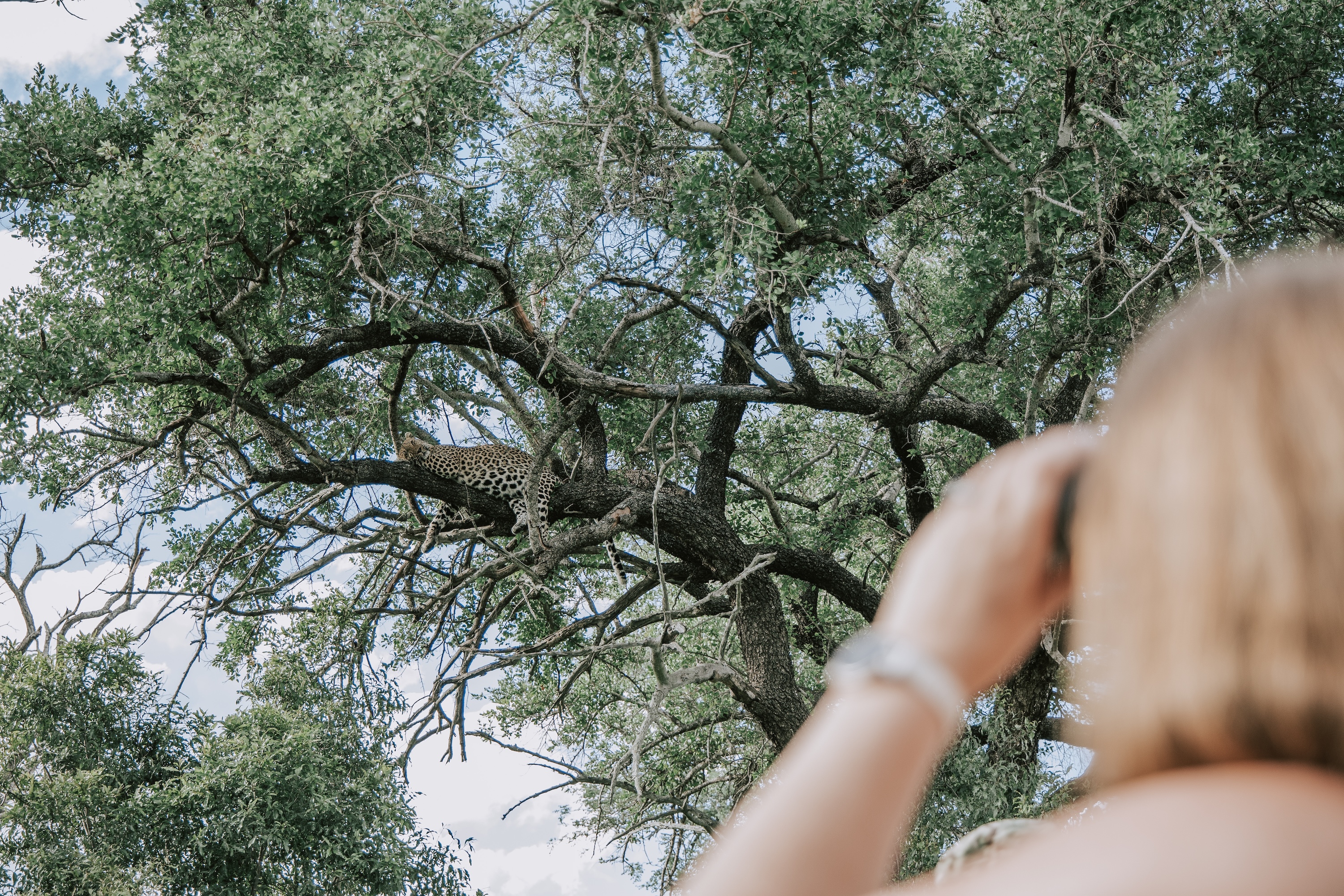
5:03am. A leopard in the tamboti thicket.
She's just made a kill, an impala, hauled into the fork of a tree overnight. The smell reaches us before the guide cuts the engine. We sit in complete silence for twenty-two minutes. Not another vehicle arrives. Not one.
That specific morning, that quality of stillness, is only possible because we're in a private reserve. Understanding why is what this post is for.
In Kruger itself, that same sighting may have involved twenty vehicles, radios crackling, engines idling, and people jockeying for position. Here, it felt like the bush belonged entirely to the leopard.
Kruger National Park is one of Africa's great conservation achievements. Twenty thousand square kilometres of protected wilderness stretching across South Africa's Limpopo and Mpumalanga provinces. It's accessible by self-drive, popular, and genuinely extraordinary for wildlife.
But it operates under national park rules. No off-road driving. No night game drives. Set speed limits. Shared roads. Peak season brings significant vehicle pressure at sightings.
For independent travellers who love the freedom of self-driving, Kruger is brilliant. You can spend entire days moving at your own pace, stopping for elephants beside the road or lingering over coffee at a picnic site while giraffes drift through the distance.
For many South Africans, it's deeply nostalgic. For many first-time international visitors, though, it isn't quite the safari they imagined.
Most first-time visitors assume Kruger National Park and the surrounding private reserves are separate ecosystems. They are not.
Wildlife moves freely across unfenced boundaries between Kruger, Sabi Sands, Timbavati, Thornybush, and the wider Greater Kruger region. The leopard we watched that morning could easily cross between them overnight.
The difference is not the animals. It's the experience.
Private reserves operate on exclusive traversing rights, meaning only a small number of vehicles can access specific areas at any one time. That is what creates the feeling of solitude, flexibility, and intimacy that people often associate with a luxury safari in South Africa.
This is also why two travellers can technically be in the same ecosystem and come home describing completely different safaris.
Adjacent to Kruger, sharing the unfenced boundary, are a series of privately owned game reserves. The best known include Sabi Sands, Timbavati, and Thornybush.
These reserves operate independently from the national park rules. They have exclusive traversal rights over large tracts of wilderness, many reserves do limit vehicles at sightings, and full night drive permissions.
Sabi Sands is known for some of Africa's best leopard viewing and ultra-luxury lodges. It is arguably the most famous private reserve in South Africa, and often the benchmark people refer to when they imagine a classic luxury safari.
Timbavati feels larger, quieter, and slightly wilder. Predator sightings are exceptional, the landscapes are beautiful, and many camps lean more heavily into conservation and wilderness than polished luxury.
Thornybush sits in a sweet spot for many first-time safari travellers. Excellent guiding, strong Big Five sightings, and a range of lodge styles that work across different budgets.
"I spent three nights at Thornybush earlier this year. The write-up is here. It gives you the on-the-ground picture better than any description I can offer." - Danni, Founder of Undiscovered Africa
Three Unforgettable Nights at Thornybush
This is difficult to explain until you've experienced it.
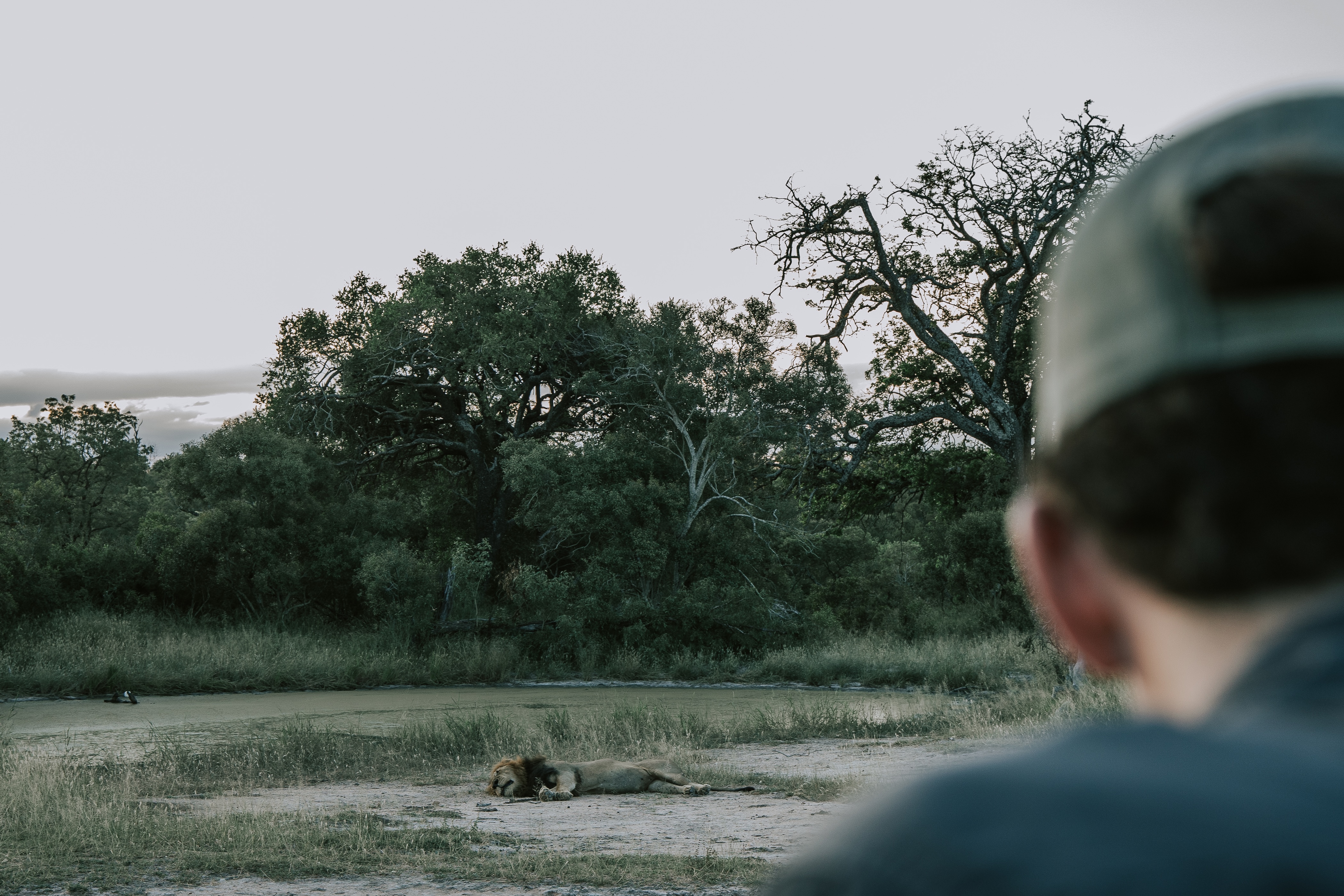
Your guide leaves the road because a tracker has noticed fresh leopard tracks in the sand. The vehicle moves slowly through the bushveld while the tracker reads broken grass, alarm calls, and paw prints almost invisible to everyone else.
Then suddenly the leopard is there.
This ability to follow wildlife fluidly, rather than waiting for animals to appear beside public roads, fundamentally changes the experience.
For many first-timers, this is the moment safari becomes emotional rather than observational.
Your vehicle follows the animal, not the road.
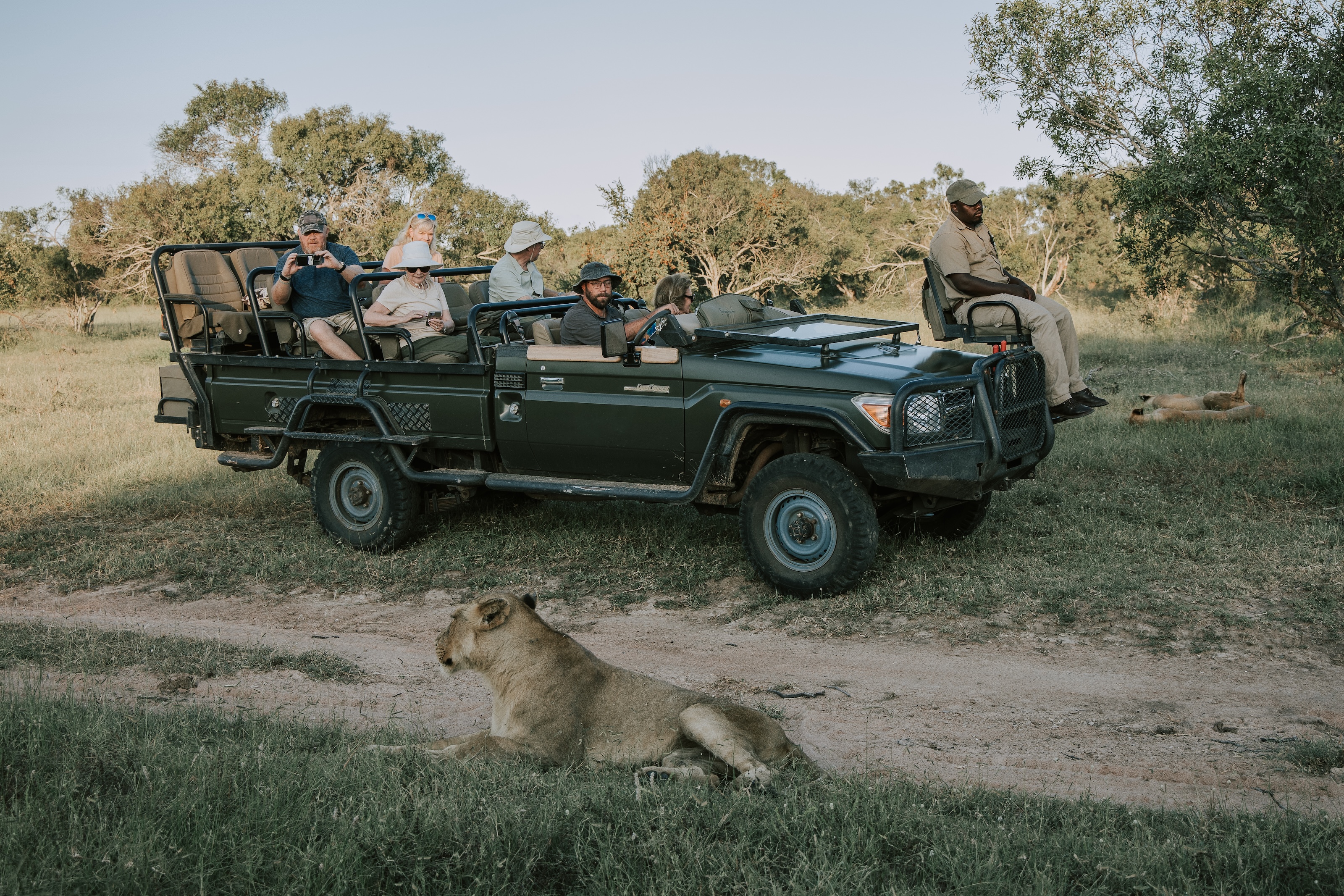
This is one of the biggest differences between Kruger National Park and private game reserves. Skilled trackers and guides can safely move off-road to maintain sightings while respecting the animal's space and behaviour.
The bush after dark is an entirely different world.
Spotlights catch bush babies leaping through trees, lions becoming active, hyenas moving across open clearings, and sometimes the extraordinary glow of a leopard's eyes in the darkness.
Kruger does offer guided night drives through SANParks camps and authorised operators, but you cannot self-drive in the park after gate closing times. In private reserves, guides have far more flexibility to track wildlife after dark, which creates a much more immersive and intimate experience overall.
Exclusive traversals mean you're not competing for sightings.
That does not just improve photography. It changes the emotional texture of the experience completely. Silence becomes possible again.
Private reserves invest heavily in field guiding.
The tracker seated on the bonnet is not there for theatre. He is reading the bush every second. Spoor, bird calls, scent, movement, wind direction. Great safari guiding is a specialised skill developed over the years.
This is often the invisible difference people only recognise once they've experienced it.
From your room to your ranger, the level of care is categorically different.
Private reserve lodges are designed around immersion and comfort. Open-air suites, private plunge pools, exceptional food, carefully timed game drives, and staff who know guests personally within hours of arrival.
If you're wondering what to look for in a safari lodge, the guiding matters just as much as the room itself.
.jpg)
For the self-drive traveller who wants to set their own pace, sleep in a rest camp, and cover ground independently, Kruger is excellent and significantly more affordable.
It is also ideal for repeat safari travellers who already understand animal behaviour and genuinely enjoy the process of finding wildlife themselves.
And honestly, some people simply love the independence of it.
It is also worth combining Kruger with a private reserve if the budget allows. Spend a few nights self-driving, then move to a private property for guided, exclusive experiences. The contrast works beautifully.
Private reserve lodges typically cost USD 600 to 1,500 per person per night, fully inclusive. A Kruger rest camp runs around USD 40 to 120 per person.
The difference is real and significant.
Whether it is worth it depends entirely on what kind of experience you want. Independent wildlife spotting, or total immersion guided by an expert.
For most first-timers, the private reserve experience is the one they came for.
Particularly for travellers deciding between South Africa vs East Africa for a first safari, Greater Kruger private reserves often offer one of the easiest and most rewarding introductions to safari anywhere on the continent.

No, but many border Kruger directly and share unfenced boundaries with the national park. Wildlife moves freely between them, which means you'll see the same animals under very different safari conditions.
They offer very different experiences. Sabi Sands is known for luxury lodges, exceptional leopard sightings, off-road tracking, and highly exclusive game viewing. Kruger National Park is more affordable, accessible, and ideal for self-drive travellers.
For many first-time safari travellers, yes. You're paying for exclusivity, expert guiding, fewer vehicles, off-road access, night drives, and a significantly more immersive experience overall.
Thornybush, Sabi Sands, and Timbavati are all excellent options within the Greater Kruger ecosystem. The right choice depends on your budget, preferred lodge style, and how private or luxurious you want the experience to feel.
Generally no. Most private reserves operate fully guided safaris with professional rangers and trackers. Self-driving is primarily associated with Kruger National Park itself.
Usually yes. Off-road access, controlled vehicle positioning, fewer cars at sightings, and experienced guides create much better photographic conditions than public roads inside Kruger.
Most reserves strictly control vehicle numbers at sightings, especially around predators. This creates calmer wildlife encounters and a far more intimate experience for guests.
If budget allows, absolutely. Combining a few days of self-driving in Kruger with a luxury private reserve stay gives you two very different perspectives on the Greater Kruger ecosystem.
Danni has personally stayed in Thornybush and works closely with lodges across Sabi Sands, Timbavati, and the wider Greater Kruger region. She'll help you understand which reserve genuinely suits your travel style, budget, and expectations, without the usual safari industry confusion.
Contact us to begin planning a safari that feels personal, considered, and genuinely worth the investment.