
Mombo Camp is one of Africa’s most iconic safari destinations. Join Mike as he shares his firsthand experience of the wildlife, guiding, and vast Okavango Delta landscapes that make this corner of Botswana so special.
Some places you visit on safari exceed their reputation. Mombo is one of them.
Mike, who co-founded Undiscovered Africa with Danni, recently spent four nights at Mombo Camp in Botswana’s Okavango Delta. He’s travelled extensively across sub-Saharan Africa. He’s stayed in extraordinary camps. He’s not easily impressed. And yet, when he came back from Mombo, the first thing he said was:
“It’s just a pretty epic place.”
That’s not hyperbole. That’s someone who has seen a lot of Africa, trying to find the right words for a place that genuinely moves you.
Mombo sits at the northern tip of Chief’s Island, deep inside the Moremi Game Reserve in Botswana’s Okavango Delta. Getting there involves a light aircraft from Maun, typically a 20-to-30-minute flight over floodplains that are already extraordinary from the air. There are no roads in. No drive-in access. No casual day visitors.
This matters. The Okavango Delta is the world’s largest inland delta, a UNESCO World Heritage Site and Mombo sits in what many wildlife ecologists consider its most productive wildlife corridor. The name itself comes from the Yei people of Botswana: “mombo” means “the place of plenty.” That’s been true for centuries. It’s still true today.
The concession straddles the point where the main Okavango River splits into its primary channels. This creates a uniquely fertile environment of open floodplains, seasonal wetlands, palm-fringed islands, and dense woodland, all of which attract and concentrate wildlife in extraordinary numbers year-round.
Mombo is run by Wilderness, one of southern Africa’s most respected conservation-led safari operators. There are two camps on the island: Mombo Camp (nine tents) and Little Mombo (three tents), linked by a pedestrian bridge. They share guiding teams and resources, but each functions as its own intimate camp.
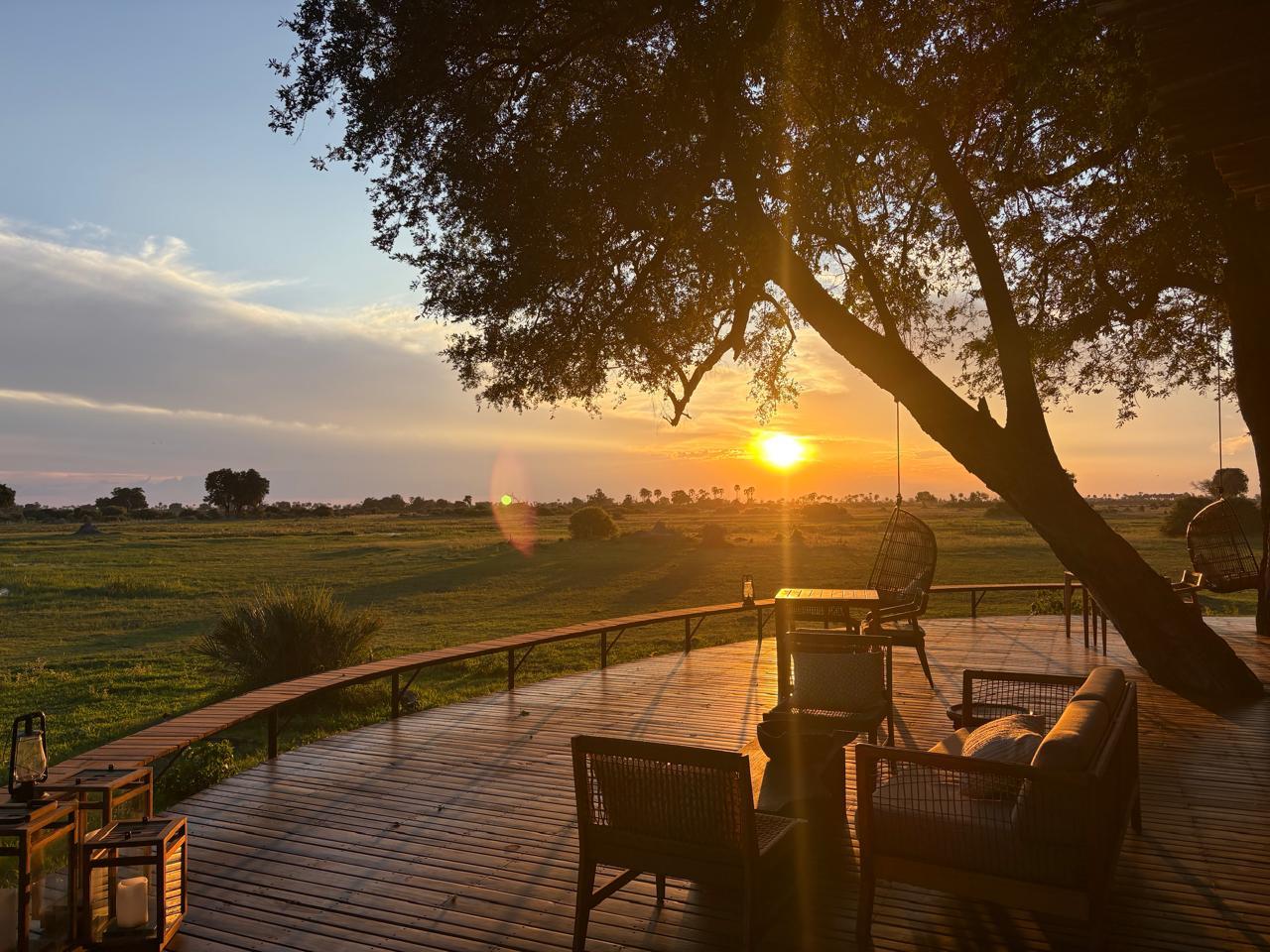
The tents are large, genuinely large, raised on wooden decks beneath ancient mangosteen and ebony fig trees, with private plunge pools and sweeping views over the floodplain. The design is understated in comparison to some of Africa’s flashier lodges. You won’t find the dramatic architecture of a Singita Lebombo or the gallery-like interiors of somewhere like Xigera. Mombo doesn’t try to compete on that front. The bush is the showroom. The camp’s job is simply to frame it well and it does.
What the design does prioritise is sustainability. Solar energy, natural materials, minimal environmental footprint. The original camp was one of the early pioneers of responsible luxury safari in southern Africa… It’s been quietly refining that approach for decades.
Travellers planning a high-end Botswana safari will inevitably weigh Mombo against other iconic names. It’s a fair question. Understanding how the camps differ helps you choose the right one for your priorities.
Singita, for example, is the gold standard in lodge design and hospitality architecture. If the aesthetic experience of where you sleep is as important as what you see on game drive, Singita’s properties, in Tanzania’s Grumeti Reserve, South Africa’s Kruger, Rwanda, are unmatched. The interiors are jaw-dropping, the wine cellars legendary, the service almost theatrical in its polish. Abu Camp in the Okavango, which Singita is set to take over, will bring that same energy to Botswana.
But Mombo isn’t competing with Singita on design. It’s competing with wildlife. And on that front, very few places on the continent, if any, can match it.
Other Okavango Delta camps like Vumbura Plains (also Wilderness) offer more water-based activities…mokoro excursions, boat safaris, and arguably more photogenic floodplain scenery. Jao is a popular choice for guests who want the full wetland experience. &Beyond Sandibe is beautifully designed and excellent for families. All are wonderful. None reliably produce predator sightings at the frequency Mombo does.
Mombo’s limitation, if it can be called that, is its narrower activity menu. Game drives are the primary offering. There are no night drives (the Moremi Game Reserve doesn’t permit them), no walking safaris, no boating. For wildlife-focused travellers, that’s a non-issue. For those wanting a more varied safari programme, it’s worth factoring in.
The phrase “high wildlife density” gets used so often in safari marketing that it’s almost lost meaning. At Mombo, it means something specific.
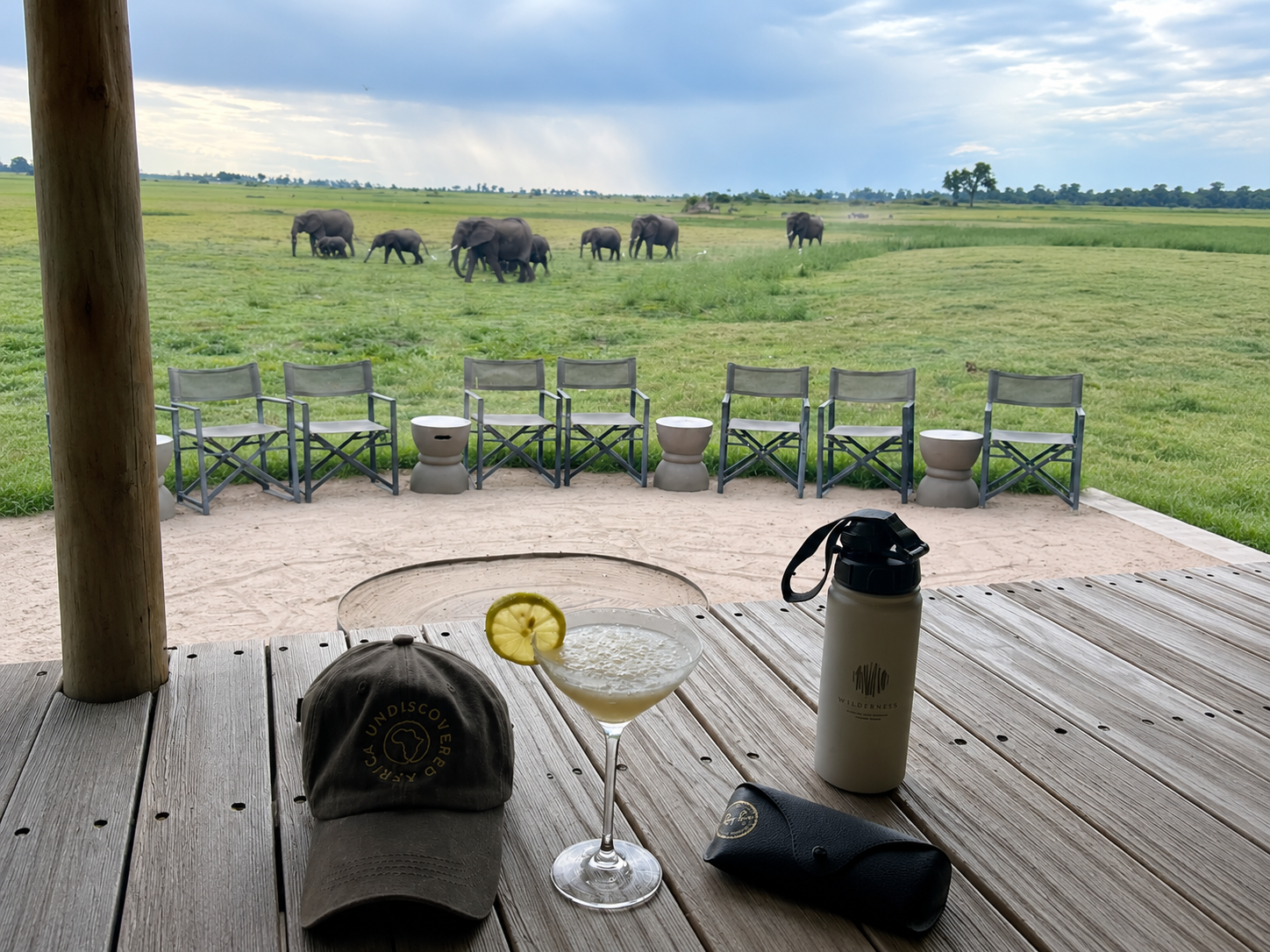
“You go on a game drive, and you never don’t see an animal,” Mike says. “Impala everywhere. Elephant moving through constantly. Zebra around every corner. It’s not a matter of hoping you’ll see something. The question is what you’ll see next.”
The combination of ecological factors on Chief’s Island is genuinely unusual. The reliable water sources and nutrient-rich vegetation draw enormous herds of red lechwe, buffalo, impala, giraffe, and elephant and where there are large concentrations of plains game, predators follow. During Mike’s stay, wild dogs moved through the floodplains on a hunt, leopards were found draped across tree branches with kills, and lions called across the landscape at dusk. None of it felt like a setup. All of it felt completely natural.
Mombo is also one of very few places in Botswana where you can reliably see both black and white rhino… a rarity on the continent given the decimation of rhino populations across Africa over the past four decades.
What surprised Mike most wasn’t any individual sighting. It was the absence of other vehicles.
“You just don’t see another vehicle. You’re watching wild dogs on a hunt and there’s no one else there. That exclusivity, combined with the wildlife density, that’s what makes Mombo feel different to almost anywhere else I’ve been.”
Experienced safari travellers know that a great guide can make an ordinary sighting extraordinary, and a mediocre guide can make an extraordinary sighting feel flat. Guiding quality is everything.
At Mombo, Mike spent most of his drives with a guide known simply as Doc , a man who has been at camp for over twenty years, has guided heads of state, royalty, and more Hollywood names than he’d probably care to mention, and who by now is as much a part of Mombo’s identity as the floodplains themselves.
“He’s guided presidents. Hollywood actors. He’s basically part of the furniture,” Mike says, in the way you talk about someone who has achieved a kind of quiet legend status.
The best guides don’t just find animals. They read landscapes. They spot a crushed blade of grass and know a lion passed within the hour. They hear a francolin alarm call and understand what it means before anyone else has registered the sound. They give you context, ecological, behavioural, historical, that transforms what you’re watching from a wildlife sighting into something genuinely meaningful.
Wilderness as an operator has long invested heavily in guide training and retention. The depth of expertise at Mombo is a reflection of that, but Doc is in a different category altogether. Guests who’ve been to Mombo multiple times often book specifically around his availability.
Safari memories are funny things. You arrive expecting the big moments: the lion kill, the cheetah sprint, the leopard in the fig tree, and those do happen at Mombo. They happen more reliably here than almost anywhere else on the continent.
But what Mike talks about most isn’t any single dramatic sighting.
It’s the cool stillness of early morning game drives before the heat builds. It’s a cold gin and tonic on an anthill, looking out across a plain that seems to go on forever, with zebra moving slowly in the middle distance and not another soul in sight. It’s the particular quality of light on the floodplain in late afternoon, that warm, flat African gold that makes everything look like a painting.
And then there’s the afternoon he describes where the group had stopped for sundowners and the conversation had settled into one of those easy, comfortable silences that only happen in wild places.
Then someone heard lions calling. Distant. Rolling across the open plain.
Within thirty seconds, everyone was back in the vehicle.
That blend of stillness and unpredictability, the ability to be completely at peace one moment and completely electric the next, is what makes safari genuinely addictive. It’s also what Mombo delivers better than most.
Mombo sits at the very top of the luxury Botswana safari market. Rates typically run from around USD 1,800 to USD 3,500+ per person per night in peak season (July to October), fully inclusive of accommodation, all meals, activities, and park fees. It’s not an entry-level choice.
It’s the right camp for travellers who:
• Prioritise wildlife encounters above all else and want the best possible chance of seeing Africa’s most iconic predators in genuinely wild conditions
• Value exceptional guiding and want to learn, not just observe
• Seek exclusivity without feeling like they’re in a theme park
• Want to experience the Okavango Delta in its most concentrated, dramatic form
• Are repeat safari-goers who’ve ticked the ‘bucket list’ camps and want to understand what genuine excellence looks like
It may not be the right fit if you want water-based activities, need air conditioning (Wilderness doesn’t offer it), or are looking primarily for an aesthetic design statement.
There are newer camps. Flashier camps. Camps with better interiors and more varied activity menus.
But Mombo has endured as a benchmark for a simple reason: very few places in Africa deliver that feeling of being completely, unambiguously inside the natural world, not observing it through a tastefully designed window, but genuinely inside it. The wildlife is everywhere. The guiding is extraordinary. The scale of the landscape is humbling.
“What strikes you at Mombo is the vastness,” Mike says. “It’s unlike anywhere else I’ve travelled in Africa.”
That’s the thing about Mombo. It doesn’t need to try.
Botswana remains one of the finest wildlife destinations on the continent, particularly for travellers who want exceptional game viewing, experienced guiding, and a genuine sense of wilderness rather than a manufactured experience.
Whether Mombo belongs on your itinerary depends on what kind of safari you’re looking for. At Undiscovered Africa, we spend time in the camps we recommend, which means Mike’s experience at Mombo isn’t drawn from a brochure. It’s first-hand.
Get in touch with us to start building a Botswana safari around your pace, your interests, and the kind of Africa you’ve always wanted to experience.